

Protecting the Foundation of Your Teeth
Gum disease is one of the most common dental conditions and a leading cause of tooth loss in adults. It is often painless in the early stages, which is why many people do not realise they have it until it is well established.
At New'Gen Dental Surgery we assess gum health as part of every examination, so that changes are picked up early, when treatment is more straightforward.
Send an enquirySigns to Watch For
- Gums that bleed when you brush or floss
- Red, swollen or tender gums
- Persistent bad breath or a bad taste
- Gums that appear to be receding
- Teeth that feel loose or have shifted position
- A change in how your teeth fit together
Bleeding gums are not normal. If your gums bleed when you clean them, it is worth having them assessed.
How Gum Disease Develops
Plaque that is not removed hardens into calculus, which sits on the tooth surface and below the gum line. The bacteria in that build-up cause inflammation.
In the early stage, gingivitis, the inflammation affects the gum only and is usually reversible with professional cleaning and improved home care. If it progresses to periodontitis, the supporting bone around the tooth is affected. Bone that has been lost does not grow back on its own, so treatment focuses on stopping further loss.

Assessment and Treatment
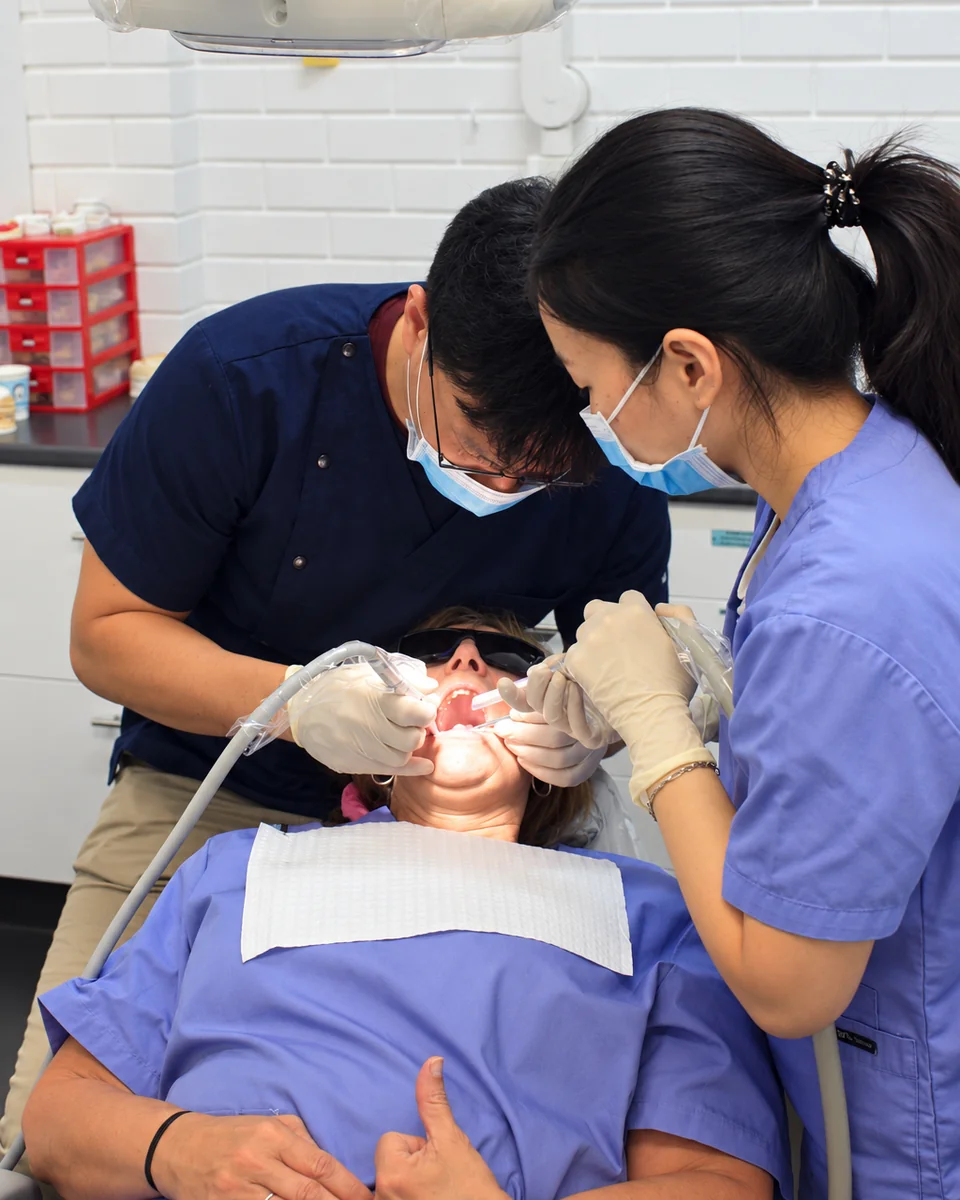
We assess your gums by measuring the depth of the space around each tooth, checking for bleeding and recession, and taking X-rays where needed to assess bone levels.
Treatment usually starts with thorough professional cleaning above and below the gum line to remove plaque and calculus. Depending on the severity, this may take more than one appointment. We then review how your gums have responded.
For more advanced cases, we may recommend referral for specialist periodontal care.
Your Role in Treatment
Gum disease management is a partnership. Professional cleaning removes what has built up, but daily brushing and cleaning between the teeth is what keeps it from returning.
We will show you techniques suited to your mouth, including which interdental tools are likely to work best for you. Smoking, uncontrolled diabetes and some medications can affect gum health, and we will talk with you about anything relevant to your situation.
Ongoing Maintenance
Once gum disease has been treated, regular maintenance visits are important. Patients who have had periodontitis are usually reviewed more frequently, because the condition can recur.
Book Your Appointment
To have your gums assessed, call 03 5792 2055 or send us an enquiry.
- Phone
- 03 5792 2055
- Address
- 72 Anzac Avenue, Seymour VIC 3660
- Hours
- Monday to Friday, 9am to 5pm
Wheelchair access is available at the rear of the practice. HICAPS is available for on-the-spot health fund claiming, so please bring your health fund card. We are a preferred provider for Medibank and Bupa, and we participate in Smile.com.au. Payment plans are available through DentiCare and Pretty Penny Finance.
Health funds




Frequently Asked Questions
No. Bleeding usually indicates inflammation. It is worth having your gums assessed rather than assuming it will settle on its own.
Early gum disease, gingivitis, is usually reversible with treatment and good home care. Once bone has been lost, treatment focuses on stopping the disease progressing rather than reversing the damage.
That depends on severity. Mild cases may need one visit, while more advanced cases usually require several appointments followed by a review.
Cleaning below the gum line can be uncomfortable, so the area is numbed where needed. Some tenderness afterwards is common and settles quickly.
Yes. Advanced gum disease damages the bone supporting the teeth, which can lead to teeth becoming loose and eventually being lost.
Patients who have been treated for periodontitis are generally reviewed more often than the standard interval, as the condition can return without ongoing maintenance.