

Keeping Your Teeth and Gums Healthy Between Visits
Brushing and flossing do most of the work, but there are places a toothbrush cannot reach. Plaque left behind hardens into calculus, which sticks firmly to the tooth surface and sits below the gum line where it cannot be removed at home.
A professional clean removes that build-up. It is a short, routine appointment, and for most patients it is the single most useful thing they do to avoid more involved treatment later.
Send an enquiry
What a Scale and Clean Involves
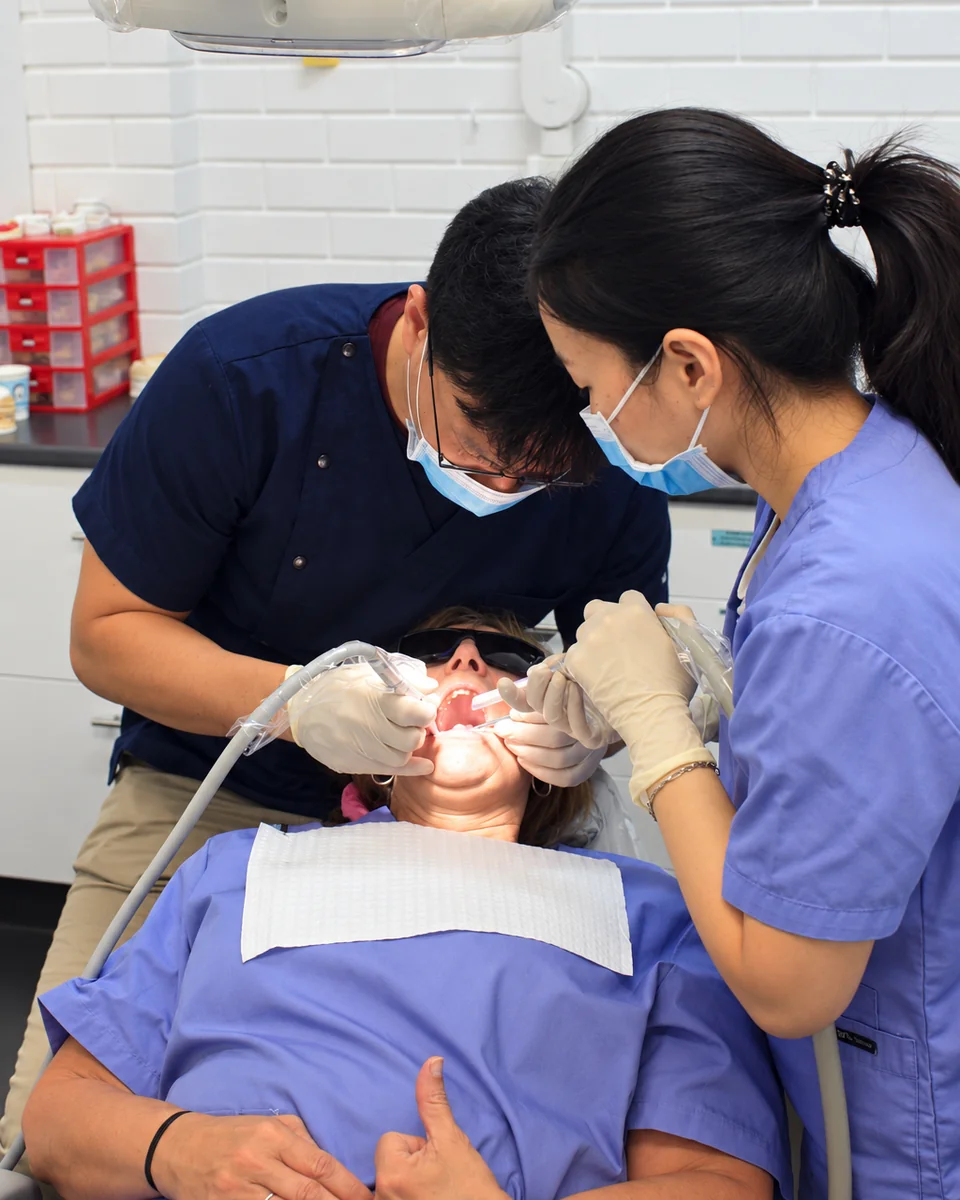
We remove hardened deposits from the tooth surfaces and just below the gum line, then clean and polish the teeth to leave a smooth surface that plaque finds harder to cling to.
Surface staining from tea, coffee, red wine and smoking is also removed during the clean. This does not change the natural shade of your teeth, but many patients notice their teeth look fresher afterwards.
Where there is heavier build-up or the gums are inflamed, cleaning may take longer or need more than one visit. We will tell you before we start if that is likely.
How Often You Need a Clean
There is no single answer that suits everyone. Some patients do well with a clean every twelve months, while others need one every three to six months to keep their gums stable.
What determines your interval includes how quickly you build up calculus, whether your gums bleed, your smoking status, your medical history and medications, dry mouth, and whether you have been treated for gum disease in the past.
Patients who have had periodontitis generally need more frequent maintenance, because the condition can return.
Cleaning at Home
Professional cleaning removes what has accumulated. What keeps it from coming back is what you do every day.
We will look at how you are cleaning and give you practical, specific feedback rather than general advice — which areas you are consistently missing, whether your technique is causing gum recession, and which interdental brushes, floss or other tools are likely to suit the gaps between your teeth.
Cleaning between the teeth matters as much as brushing. Decay and gum disease commonly start in the spaces a brush cannot reach.
When Cleaning Is Not Enough
If your gums bleed, feel tender or have started to recede, that is inflammation rather than something a firmer brush will fix. In that case we assess your gums properly and discuss treatment for gum disease, which is a different appointment with a different purpose.
We will always tell you which one you need rather than repeating routine cleans on gums that require treatment.
Book Your Appointment
To book a clean, call 03 5792 2055 or send us an enquiry.
- Phone
- 03 5792 2055
- Address
- 72 Anzac Avenue, Seymour VIC 3660
- Hours
- Monday to Friday, 9am to 5pm
Wheelchair access is available at the rear of the practice. HICAPS is available for on-the-spot health fund claiming, so please bring your health fund card. We are a preferred provider for Medibank and Bupa, and we participate in Smile.com.au. Payment plans are available through DentiCare and Pretty Penny Finance.
Health funds



Frequently Asked Questions
Commonly every six to twelve months, though some patients need cleaning more often. We recommend an interval based on your gum health, build-up rate and risk factors.
Most patients find it comfortable. If your gums are inflamed or there is heavy build-up it can be more sensitive, and we can numb the area if needed.
Cleaning removes surface staining, which often makes teeth look brighter, but it does not change their natural shade. Whitening is a separate treatment.
Bleeding usually indicates inflammation rather than brushing too hard. It is worth having your gums assessed rather than waiting for it to settle.
Most funds provide a benefit for a scale and clean under general dental cover. We have HICAPS for on-the-spot claiming, and we are a preferred provider for Medibank and Bupa.
Yes. Gums often become more inflamed during pregnancy, so keeping up with cleaning is sensible. Let us know you are pregnant so we can adjust your care.